Building Demolition Begins with Paperwork
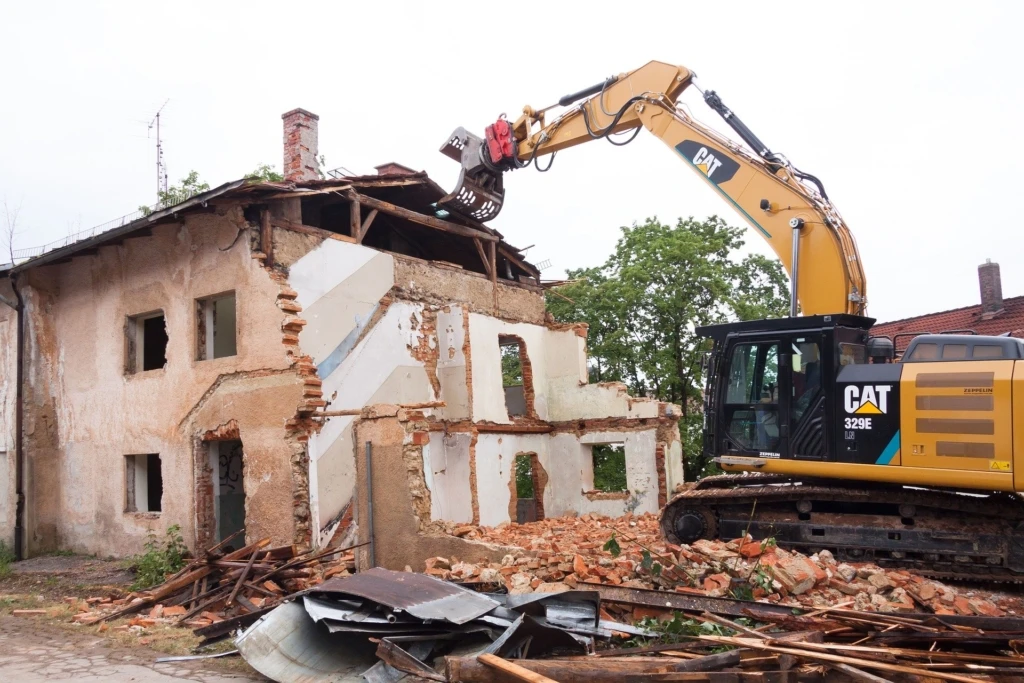
It is common knowledge that one cannot build without a project and a permit. In fact, exactly the same applies to demolition: since demolition activities fall under construction and this area is regulated by the building code, the removal of a building begins with the preparation of a demolition project and the application for a permit.
Without a permit for demolition (as well as without a permit for construction), the property owner faces a hefty fine.
So you need a project
The demolition project shows:
- the technological sequence of work;
- the need for shoring;
- the organization of work; and
- the volume of demolition waste, possible reuse, and environmentally friendly storage.
By following the project, it is possible to demolish in a way that is safe for both the demolition workers and the surrounding environment.
The demolition project must be commissioned with the specific building to be demolished in mind, so you cannot use another building's demolition project. Demolition companies prepare such projects. If you order the demolition from them as well, they usually do not charge extra for preparing the project.
Approvals and permits
When the demolition project is ready, it must be coordinated with network operators (for example, gas and electricity companies). You also need to contact the local municipality to apply for a building permit that allows demolition. If there are other buildings near the house being demolished, the local municipality may request a detailed plan of the demolition process.
For demolition in an environmentally valuable area, you also need approval from the Heritage Conservation Board.
When starting and ending demolition, you must submit a notice to the local municipality, and at the end of the process, a waste certificate proving that the waste has been disposed of in accordance with regulations. The demolished building must be deleted from the building register and the building permit must be revoked.
Demolition of a smaller building involves slightly less paperwork. Although you usually still need a demolition project, for demolition of a building up to 60 square meters, you do not need to pay a state fee and a written consent from the local municipality is sufficient. For an even smaller structure with an area of less than 20 square meters, you simply need to submit a demolition notice to the local municipality.
Demolition work follows a definite sequence
Although each building and its demolition is different, demolition work is generally divided into five stages:
- the building is emptied of its contents and disconnected from utilities;
- lighter elements (windows, doors, suspended ceilings, etc.) are removed manually and the resulting waste is sorted;
- the main structures of the building are demolished;
- construction waste is sorted, processed, and disposed of;
- the construction site is cleared.
What will all this cost?
The cost of demolition depends on several factors. For example, how far the object is from the landfill, since a large part of the cost of demolition work includes waste disposal. It also matters how large the building is, what it is made of, and how much material can be reused. For example, demolishing a building containing a lot of metal may even result in a profit.
There are many companies in Estonia that deal with demolition work and it is certainly worth asking for quotes from several companies. Pay close attention to what work the quote includes: for example, it should also include the removal of construction waste, because otherwise you may find yourself in a situation where the building is gone, but in its place stands a heap of construction rubble.
Search
Keywords
Most read articles
- Price per Square Meter of Apartments in Tallinn in 2025
- Apartment Market in Early 2026: Prices Rising, Transaction Activity Remains Modest

- Apartment Market in Early 2026: Prices Rise, Transaction Activity Remains Modest
- Estonian Apartment Prices and Market Expectations in 2025

- Notary Fee and State Fee – Who Pays and How Much?