Bonava Estonia CEO Taavi Soorm: Homes Built Without Work Accidents as a Quality Mark
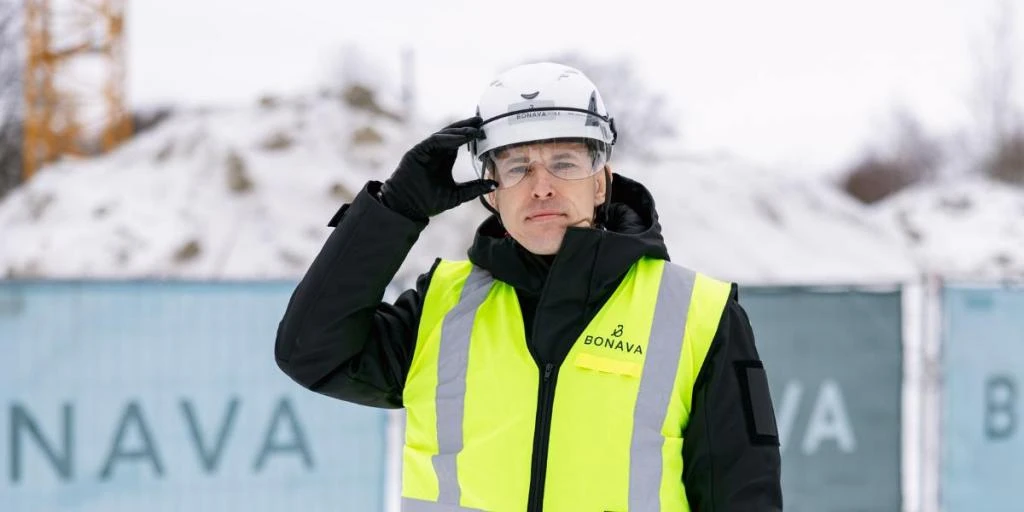
For Estonian work safety culture to reach the level of Nordic standards, leading real estate developers should set an example, and clients should also be interested in ensuring that no one was injured during the construction of their home, writes Bonava Estonia's CEO Taavi Soorm.
As consumers, we have the freedom not to be interested in how the products that reach us are made. Whether it is production supporting the maintenance of an evil empire's war machine, clothing made with child labor, or blood diamonds steeped in violence. Or also a home, during the construction of which someone was injured because elementary work safety requirements were ignored.
In Estonia, there are over 3,000 work accidents per year, or an average of eight accidents per day. For example, according to the head of the Labor Inspectorate, approximately 700 fingers are amputated annually as a result of work accidents. If the bodies of workers are allegedly buried in the Great Wall of China as it was built, then in a figurative sense, in the walls of many apartment buildings there may not only be amputated fingers and limbs, but also some drops of blood and painful recoveries.
Although the work environment in Estonian companies has improved year after year and employers' awareness of work safety has increased, last year 10 people went to work and never came home again. This year, eight people have died as a result of work accidents. These are dry statistics and numbers, but behind them are real people and family tragedies.
The state and inspectors inevitably cannot reach everywhere. In the real estate sector, leading developers must set an example, because as the largest contractors, we ourselves set the standard for how things should be done.
Experience has shown that subcontractors working on different construction sites are well aware of where the developer requires safety equipment and where not. Working on our site or that of another more responsible company can even cause frustration when safety requirements are constantly being followed up on. There is still a long way to go to reach a common culture and understanding. Those returning home from the Finnish and Swedish labor markets have also brought with them a better work safety culture, and if Nordic top-level requirements were also waiting for them here, there is hope for consistent positive change.
The consumer's attitude is equally important for promoting work safety culture. The client certainly has the right not to be interested in the kitchen side of production, but it would be humane to be at least aware of what requirements have been followed and, if necessary, vote with your wallet. The knowledge that no one was injured during the construction of my home and did not suffer irreversible harm could well be part of the home purchase decision-making process and a quality mark. Client and consumer awareness and the resulting deliberate purchasing behavior would give that final push that some companies may naturally lack from a sense of responsibility.
Construction sites always remain dangerous work environments, this fact does not change even when comprehensive safety measures are implemented, which is why one must constantly keep thinking and senses sharp and be aware of these dangers. Because every worker should come home healthy in the evening, and every home could be built without anyone's health suffering in the process.
Search
Keywords
Most read articles
- Price per Square Meter of Apartments in Tallinn in 2025
- Apartment Market in Early 2026: Prices Rising, Transaction Activity Remains Modest

- Apartment Market in Early 2026: Prices Rise, Transaction Activity Remains Modest
- Estonian Apartment Prices and Market Expectations in 2025

- Notary Fee and State Fee – Who Pays and How Much?