Housing Affordability Analysis of Baltic Capital Cities
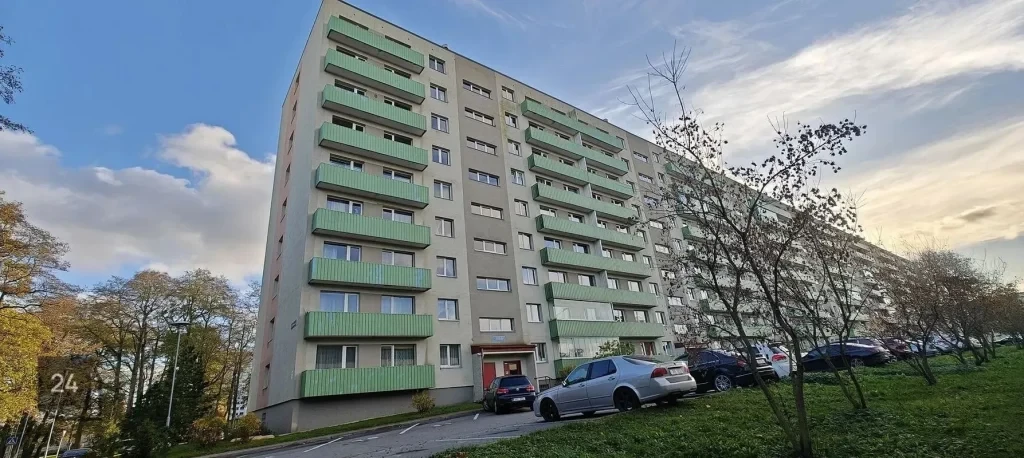
Falling interest rates bring more buyers to the apartment market
Demand in the Tallinn apartment market showed signs of improvement in the third quarter. Apartments were already somewhat more affordable compared to a year ago, as interest rates fell and the price-to-wage ratio for apartments improved. Falling interest rates support the continued improvement in housing affordability and demand.
Home buyers seek alternatives on the secondary market instead of new developments
The number of transactions in the Tallinn secondary apartment market in the third quarter was higher compared to the same period last year as well as the first and second quarters of this year. The new development market, however, remained depressed – there were fewer reservations than in the first and second quarters of this year, but somewhat more than a year ago. The share of new developments in all transactions remained at the lowest level of the past ten years. While in 2016–2019 and 2022–2023 transactions with new developments accounted for an average of a quarter of all transactions in Tallinn, in the third quarter they represented only 12% of all transactions.
The high price level of new developments has prompted home buyers to seek alternatives on the secondary market. More detailed statistics show that the share of transactions involving relatively new and more expensive secondary market apartments was higher in the third quarter compared to the average of the previous two years. This in turn affected the price increase in secondary market apartments, which was 2.6% in the third quarter compared to a year ago. The average offer price for new developments based on developer website statistics was 3.7% higher in the third quarter compared to a year ago. However, the Land Board's transaction statistics suggest that developers have made some price concessions, so on average, new developments in the third quarter were 1.6% cheaper than a year ago.
Falling interest rates support apartment affordability
In the third quarter, an average family living in Tallinn could afford a secondary market apartment of up to 60 square meters. The lowest point in affordability fell in the third quarter of last year, when on average it was possible to purchase a secondary market apartment of up to 54 square meters. The improvement in apartment affordability is mainly supported by falling interest rates, but the price-to-wage ratio for apartments has also gradually improved.
Based on the Land Board's transaction statistics, an average family could afford a new development apartment of up to 40 square meters in the third quarter. Since the addition of new apartments to statistics depends on the completion of new developments and most transactions are reflected with a delay, developer website statistics provide a more current overview. Based on developer offer prices, an average Tallinn family could purchase approximately a 35 square meter apartment in a new development in the third quarter, compared to a 32 square meter apartment a year ago at the same time. This shows that purchasing an apartment in a new development remains primarily a privilege of higher-income households.
Tallinn's secondary market is more affordable compared to Vilnius
In Vilnius, in the third quarter, a family could on average afford approximately a 54 square meter apartment on the secondary market, and based on Lithuanian Land Board price statistics, up to a 47 square meter apartment in a new development.
Although comparable data is lacking in Riga, the situation there regarding the availability of secondary market apartments is generally better than in Tallinn and Vilnius. Based on Latvia's Land Board price statistics, a family could on average afford a 42 square meter apartment in a new development in Riga.
What does 2025 bring to the apartment market?
Interest rates will continue to fall next year. According to Swedbank's forecast, the European Central Bank will reduce the deposit facility rate by 25 basis points at each subsequent meeting, bringing it from the current 3.25 percent to 1.75 percent by September of next year. Along with the central bank's interest rate, the euribor, which serves as the basis for loan agreements, will also move downward.
The labor market has held up quite well through the years of economic downturn. While the unemployment rate has risen this year, with the improvement in the overall economic environment, it will begin to decline gradually. Average gross wages continue to grow, but at a somewhat slower pace. However, the increase in income tax combined with accelerating inflation will lead to a decline in real net wages next year. Thus, the improvement in apartment affordability and demand next year will be mainly supported by falling interest rates. Despite more positive demand prospects, the improvement will occur gradually, as real net wages will decline and households' confidence about the future remains weak.
Supply in the housing market has grown over the past couple of years and the selection of apartments is currently wide. Improved demand means that the sales period for apartments will begin to shorten and home buyers' bargaining power over price will gradually decrease.
* Swedbank's Baltic housing affordability calculation is based on a household whose income equals 1.5 times the average net wage and who wishes to purchase a 55 square meter apartment. Affordability is understood to mean a situation where home loan payments for a 30-year loan with a 15% down payment for the purchase of real estate represent 30% of the household's net income.
Article author: Marianna Rõbinskaja, Swedbank economist
Search
Keywords
Most read articles
- Price per Square Meter of Apartments in Tallinn in 2025
- Apartment Market in Early 2026: Prices Rising, Transaction Activity Remains Modest

- Apartment Market in Early 2026: Prices Rise, Transaction Activity Remains Modest
- Estonian Apartment Prices and Market Expectations in 2025
- Notary Fee and State Fee – Who Pays and How Much?