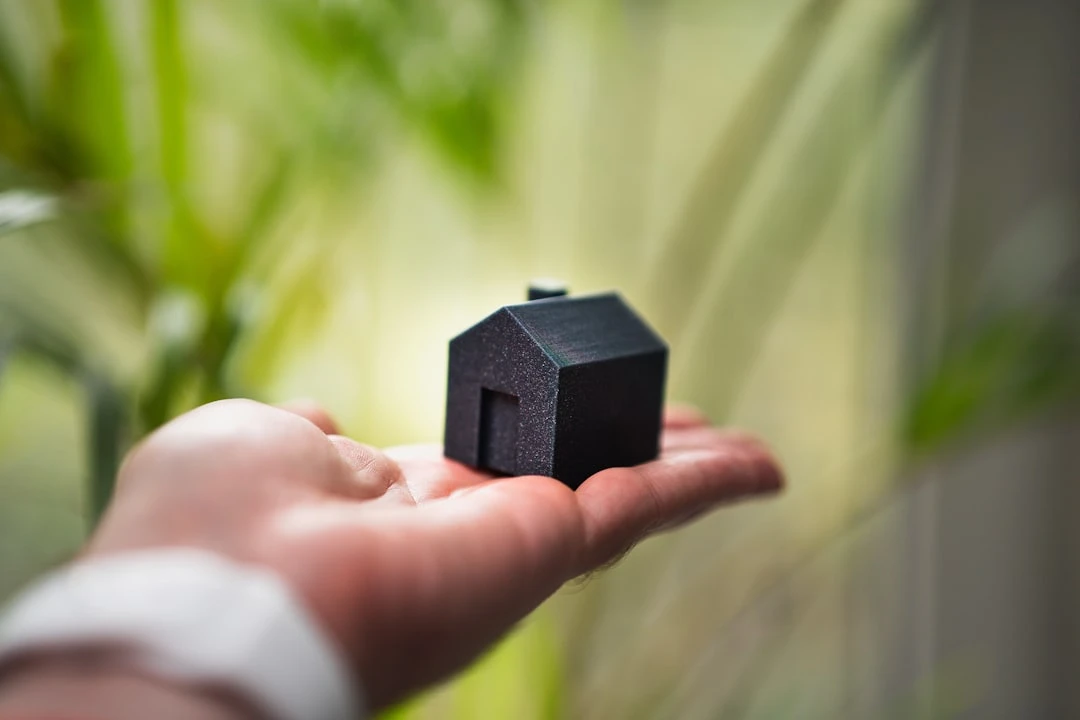
Apartment vs House: Real Estate Exchange Transactions Still Happen

While property and house exchanges were common in the 1990s, they have now become a marginal phenomenon. However, since there are still requests to exchange real estate, one needs to know several nuances that come with it, explains Janely Buht, a professional real estate broker at ELUM Real Estate.
"First and foremost, real estate exchanges are encountered today in rural areas, but also in the capital," explains Buht. "For example, a country house is offered in exchange for an urban apartment or vice versa – one wants a larger home for the family and is willing to exchange an urban apartment for a country house located farther away. If one property is worth more than the other, one is willing to compensate for the difference."
There are several reasons for preferring an exchange. For example, one doesn't want to deal with selling and an exchange seems easier. Additionally, there are financial reasons: there is no down payment for a new home or the bank won't grant a loan. As a rule, there are more exchange offers on the market when the economy is doing poorly.
"When offering a real estate exchange, one should keep in mind that both properties should be of equal value. If they are not, then one party must also pay compensation," explains Janely Buht. "If the property has a mortgage on it, one must take into account that the bank wants to receive the outstanding loan amount, which is why this money must be available."
Additionally, it is important to know that similar to sales transactions, an exemption also applies to exchanges if the apartment or house has been a place of residence and no other sales or exchange transactions have been carried out within two years. If a possible tax obligation arises, the property value is determined through an appraisal.
According to Janely Buht, there are more exchange offers than actually result in a completed transaction. After all, there may not be interested parties, and even if someone is interested in your property, there is a risk that you won't like what is being offered for yours.
"Rather, I would still recommend the classic sales process, because in such a case the opportunity to reach a successful transaction is significantly greater," concludes Buht.
Search
Keywords
Most read articles
- Price per Square Meter of Apartments in Tallinn in 2025

- Apartment Market in Early 2026: Prices Rising, Transaction Activity Remains Modest

- Apartment Market in Early 2026: Prices Rise, Transaction Activity Remains Modest
- Estonian Apartment Prices and Market Expectations in 2025
- Notary Fee and State Fee – Who Pays and How Much?