A Thousand New Rooms: Growing Competition Drives Estonian Hotels Toward the Next Quality Leap
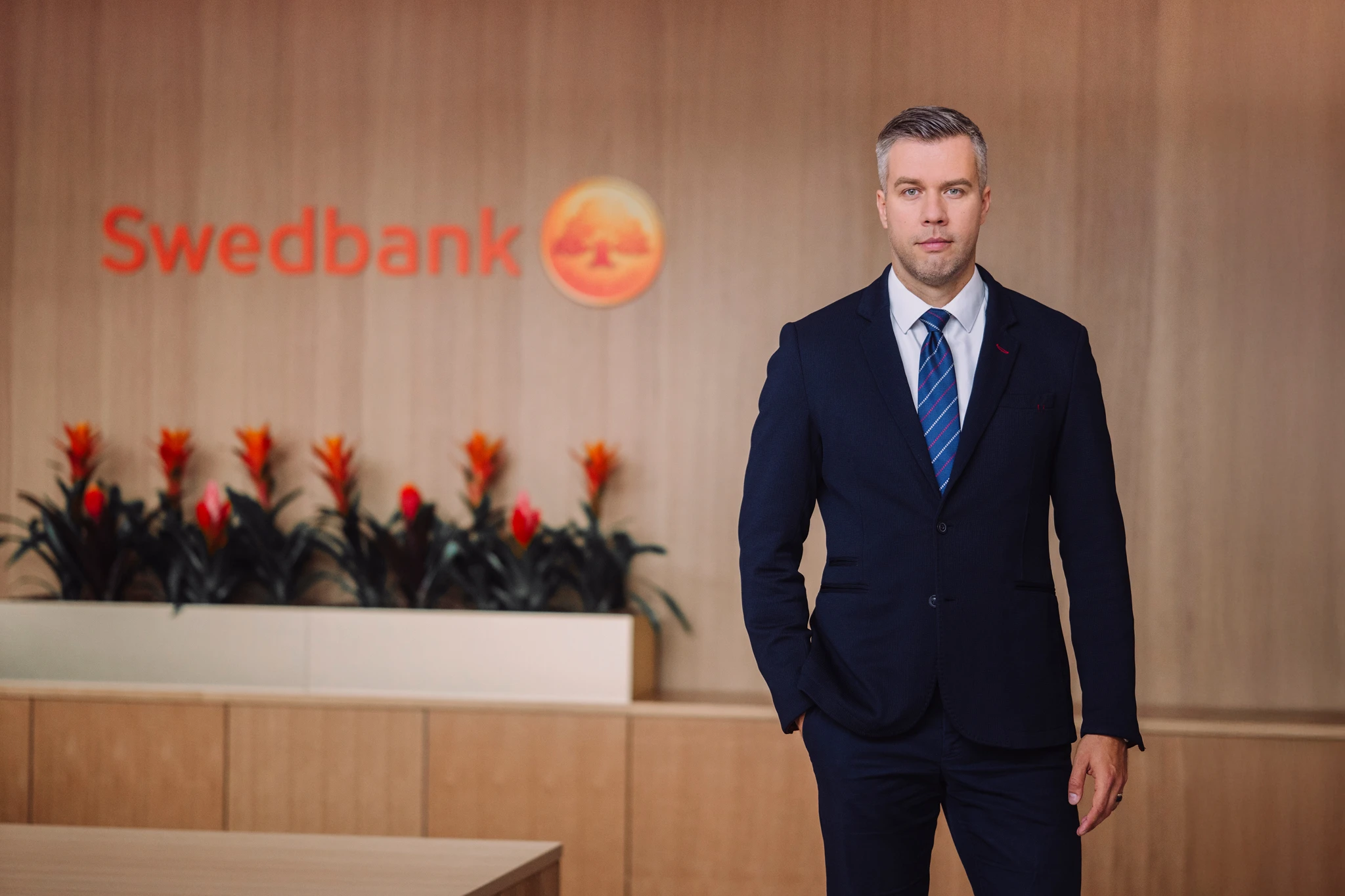
Estonia's hotel sector is beginning to reach more stable ground after the crisis years, with demand recovering and development projects moving forward again. Swedbank's hotel sector head Marko Mandel sees a new phase of development in the market: investors' confidence in the hotel business is returning and new projects will help increase the quality of the entire sector.
According to Statistics Estonia, the number of foreign tourists has grown in most months this year, but it still remains below pre-pandemic levels. "Estonia's hotel sector has not recovered linearly from the pandemic shock," noted Marko Mandel. "However, we can already see a clear transition in the market from a 'wait and see' attitude to more substantive planning. We are reaching a phase of the economic cycle where companies can make strategic investments with a longer-term perspective, which they have been postponing in recent years."
The Managing Director of the Estonian Hotel and Restaurant Association Külli Kraner noted that the structure of foreign visitors has changed and overall demand has not yet returned to 2019 levels. "Foreign tourist overnight stays are still about 15% below pre-pandemic levels, which has been significantly affected by, for example, the decline in the number of Finnish visitors. Therefore, it is increasingly important to find new target markets, whether Poland and Lithuania or more distant markets such as the USA and Asia. This trend requires both continuous strong marketing of Estonia as a tourist destination and the ability of hotels to provide services that meet the expectations of target groups," explained Kraner.
Domestic tourism is an important support for the hotel sector. Over the past three years, the number of domestic tourists has remained at roughly the same level, around 1.8 million, but their overnight stays have decreased during the same period. Some destinations, such as Tallinn, Tartu and Saaremaa, have shown slight growth, but in many regions the number of domestic visitors has declined.
Tallinn to gain nearly 1,000 hotel rooms
Although demand is still recovering at a modest pace, developers' outlook is more optimistic. Supply is growing rapidly, especially in Tallinn, where projects paused during the crisis are coming to market, as well as brand new hotels.
"Over the past year, several significant projects have been completed: a 185-room Hampton by Hilton opened on Tartu Road, a 168-room Hyatt and a 130-room Novotel opened in the harbor, and a 108-room Courtyard by Marriott is in development. In addition, the city has 300–400 hotel rooms in the planning phase, the completion of which depends on the developers' final decisions," described Mandel. Thus, Tallinn's hotel market could gain nearly 1,000 new rooms over the next three years – a significant increase considering the capital currently has around 7,900 hotel rooms in total.
Growth in supply is also visible outside the capital. While the current number of available rooms is around 4,000, it will grow by nearly 20% in the coming years. This is especially true for spa hotels, a concept popular among domestic visitors, as well as, for example, in regions such as Ida-Virumaa with the support of European Union funding.
Growing competition indicates market maturity
Marko Mandel pointed out that new hotels coming to the market bring with them new quality standards in terms of modern concept and technical solutions. This forces previously built hotels to make a quality leap. "Hotels that have been recently renovated or have already created a strong concept are in a better position now," he acknowledged.
"The competitive advantage of hotels comes from ensuring that service quality, technology and energy efficiency are aligned with current expectations. At the same time, we need to restore the economic viability of the sector, which depends on both growth in demand and a broader business environment and economic situation," added Külli Kraner.
Although rapidly growing competition may seem alarming from the perspective of companies already operating in the market, on a larger scale it is still a positive signal. "This is a sign of a mature market – new projects are moving the entire sector forward," noted Mandel. "Visitor numbers are gradually recovering, the structure of demand is becoming clearer and new developments entering the market show investors' confidence in the sector," he added.
On the other hand, companies already operating in the market should not let their guard down. "Although many new developments will only be completed after some time, now is the right time to secure your position. The decisions made over the next couple of years will shape hotels' competitiveness for a long time," emphasized Mandel.
Search
Keywords
Most read articles
- Price per Square Meter of Apartments in Tallinn in 2025
- Apartment Market in Early 2026: Prices Rising, Transaction Activity Remains Modest

- Apartment Market in Early 2026: Prices Rise, Transaction Activity Remains Modest
- Estonian Apartment Prices and Market Expectations in 2025
- Notary Fee and State Fee – Who Pays and How Much?