76 percent of Estonians are satisfied with their home. Where do they live?
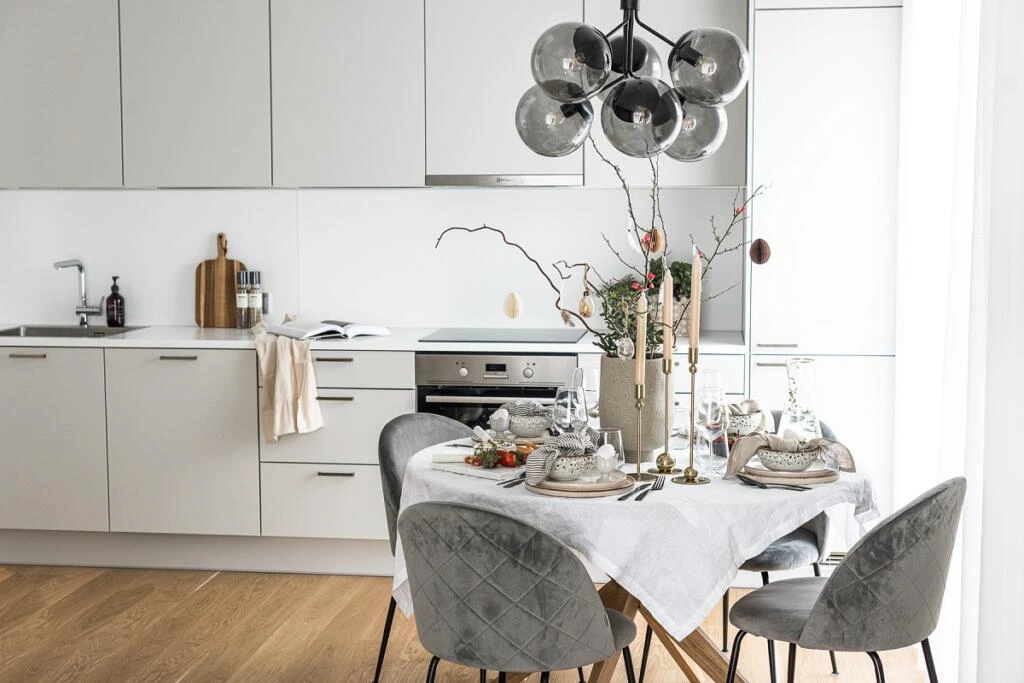
Based on Bonava's "Happy Neighborhoods Survey," 76 percent of Estonian people are satisfied with their homes. According to census data, 70% of Estonian households currently live in apartment buildings. Estonians' housing preferences have changed significantly compared to the early years of the republic. How they differ from the past and what criteria are used today when choosing a new home is discussed in more detail by Lauri Laanoja, Bonava Estonia's Sales and Marketing Director.
Modern comfort and a complete living environment have played a major role in why so many of us live in apartment buildings today. However, a hundred years ago, the primary dwelling was a detached house, which in today's terms might be called a farmhouse. According to Statistics Estonia data, detached houses were built more than apartment buildings in Estonia until the 1950s. In fact, most of this construction happened just before 1919.
"A hundred years ago, the typical dwelling was a farm complex where multiple generations lived together," said Bonava Estonia's Sales and Marketing Director, and noted that unfortunately, statistics also show that a large portion of houses built before 1919 stand empty today. "For decades, the main reason for moving to the city has been work. Even today, real estate is purchased and chosen for areas where there are more jobs or convenient transport connections have been created to get to work," said Laanoja.
Behind the rapid growth of apartment building neighborhoods in the early 20th century was largely the concentration of industries and manufacturing in settlements. The heyday of apartment building came in the 1960s, when according to Statistics Estonia data, each subsequent decade added 90-120 thousand new apartments. This changed only in the 1990s, when apartment construction fell to about 30 thousand apartments per year and has remained at approximately that level until today. Therefore, nearly two-thirds of Estonians still live in Soviet-era buildings to this day.
During the period of active construction boom, the neighborhoods of Mustamäe, Õismäe and Lasnamäe emerged in Tallinn, which offered more comforts than before: central heating and central sewerage. "So-called residential areas may at first glance seem like just large clusters of buildings, but in fact these neighborhoods were built with a complete living environment in mind and were very modern and innovative for their time," explained Lauri Laanoja. "Thought was given to the location of kindergartens and schools as well as public transport connections. So in addition to a warm home and running water, everyday life arrangements also became significantly easier for families."
The desire to move to the city or near larger cities has remained very strong even during the post-independence period. Statistics Estonia figures show, for example, that over the last 10 years, 88% of all completed residential units have been built in Harju or Tartu counties. It is particularly notable that 52% of these new residential units are home to families with children.
"With new housing developments, a lot of attention is paid to creating a complete living environment, because in addition to the apartment's own characteristics, today's home buyers pay much more attention to a safe and diverse neighborhood where it is convenient to move around with children," shared Laanoja from Bonava's experience.
For Estonians, the most important factors in choosing a residential area are its safety, cleanliness and accessibility, as emerged from the "Happy Neighborhoods" survey commissioned by Bonava and conducted by Norstat last year.
Search
Keywords
Most read articles
- Price per Square Meter of Apartments in Tallinn in 2025
- Apartment Market in Early 2026: Prices Rising, Transaction Activity Remains Modest

- Apartment Market in Early 2026: Prices Rise, Transaction Activity Remains Modest
- Estonian Apartment Prices and Market Expectations in 2025
- Notary Fee and State Fee – Who Pays and How Much?