2023 Housing Market Overview: Expected Major Price Drop Did Not Materialize
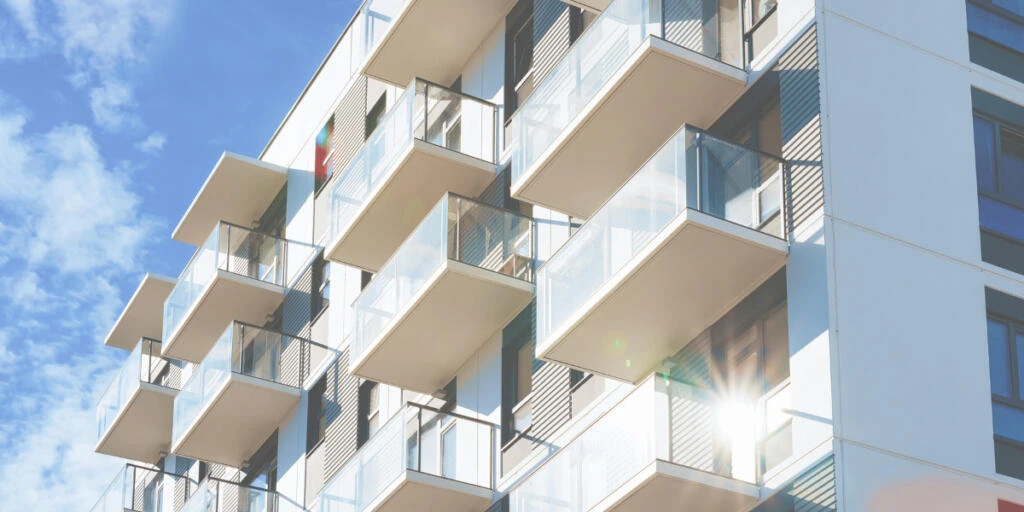
Buying a home with a loan has become increasingly unaffordable for many families this year due to the rise in euribor. The sale of new developments has taken a significant hit, but the decrease in demand has not notably lowered real estate prices. Kinnisvara24 CEO Urmas Uibomäe and Arco Vara analyst Mihkel Eliste explain whether the housing market hit bottom in 2023 and whether the situation is now beginning to stabilize.
"If we assess the real estate market based on the number of sales transactions, then by the end of 2023, we have not yet hit bottom," said Eliste. This is mainly because the relatively modest booking pace for new apartments will largely result in purchase agreements only during 2024, and this decline cannot be compensated by some growth trend in the secondary apartment market. For example, new apartment bookings in Tallinn decreased by nearly 75% compared to the pre-pandemic peak this year. Meanwhile, secondary market activity fell by only 15% in annual comparison.
Kinnisvara24 statistics show that the number of listings has grown by 10% over the year. "For a long time, there have been inventory buildups in new development apartments," acknowledged Uibomäe.
While real estate prices began to fall rapidly in early 2023, driven largely by the secondary market due to seasonal factors, despite the deteriorated economic situation, since the second quarter, price levels have actually risen somewhat.
In the Kinnisvara24 portal, the average price per square meter for apartment sales listings in Tallinn has increased by 3 percent over the year to 3,501 euros. Similarly, the price of sales listings has risen by 3 percent in Pärnu and 1 percent in Tartu. Meanwhile, the price asked for an apartment in Narva is 5 percent less compared to a year ago. In Estonia as a whole, the average price per square meter for apartment sales listings has fallen by over 7 percent over the year.
"A widespread price decline has not occurred and it will likely not materialize next year either, although potential real estate buyers have been expecting it," said Eliste.
According to him, prices have not fallen because the supply of living space has essentially not increased for a year. "If demand remains at the same level next year as well, it is difficult to find those factors that would trigger a sharp price decline. However, due to the low efficiency of the real estate market, the negative effects of the economy may well manifest in the first half of next year, so a moderate price decline of up to 5 percent in the first quarter cannot be ruled out," predicted Eliste.
Real estate is being purchased by more affluent residents
Although according to banks, most families no longer have the financial capacity for over a year to purchase a home in a new apartment building, and secondary market apartments have also become increasingly unaffordable for households on average in Tallinn, this trend has not had an impact on the real estate market. This is the case even in a situation where unemployment has begun to increase somewhat more noticeably and consumer confidence has declined once again. Eliste explains this by the fact that a large portion of the population, which would be primarily affected by such developments, has never been a potential buyer in the real estate market, and therefore their financial situation does not affect the market as a whole. In 2023, real estate was purchased mainly by more affluent residents, for whom a certain increase in loan costs was not an overly heavy burden.
The biggest hit in 2023 was to new developments. For example, in the third quarter, only 785 new apartments were purchased according to the Land Board data. So few new apartments were sold in a single quarter for the last time in 2019. "Although developers offer free parking spaces, kitchen furniture, or reduce the apartment price by about 5% to attract customers, those who would currently purchase such real estate do not consider such price discounts a particularly significant argument," acknowledged Eliste.
Developers are putting new apartments on the rental market
Since approximately one-third of the living spaces in new apartment buildings are currently unsold, developers have begun renting them out in large volumes in recent months to reduce losses. "The addition of new apartments to the rental market has therefore raised the average price per square meter of rental listings in the capital by about 4 percent to 14.1 euros," commented Uibomäe. Similarly, rental listing prices in Tartu have increased by 2 percent, but in Estonia as a whole, the average price has remained at the same level as last year.
Meanwhile, many rental property buyers have withdrawn from the market, as the rental yields of apartments in larger regional centers do not even compete with deposit interest rates. According to Eliste, there are still regions in Estonia where real estate investment continues to offer good returns.
The housing market has also contracted. For example, the number of transactions for single-family homes in Tallinn has essentially fallen to 2008 levels. According to Eliste, the housing market is doing better in lower-priced areas. "Looking ahead in the coming years, I am optimistic about the single-family, row, and semi-detached home market, as the Singing Revolution generation, who drove the apartment market to its peak in the previous decade, is reaching the point where they want to purchase a house for their next home," predicted Eliste.
Search
Keywords
Most read articles
- Price per Square Meter of Apartments in Tallinn in 2025

- Apartment Market in Early 2026: Prices Rising, Transaction Activity Remains Modest

- Apartment Market in Early 2026: Prices Rise, Transaction Activity Remains Modest
- Estonian Apartment Prices and Market Expectations in 2025
- Notary Fee and State Fee – Who Pays and How Much?