Why Does the Area Around an Electrical Outlet Turn Black?
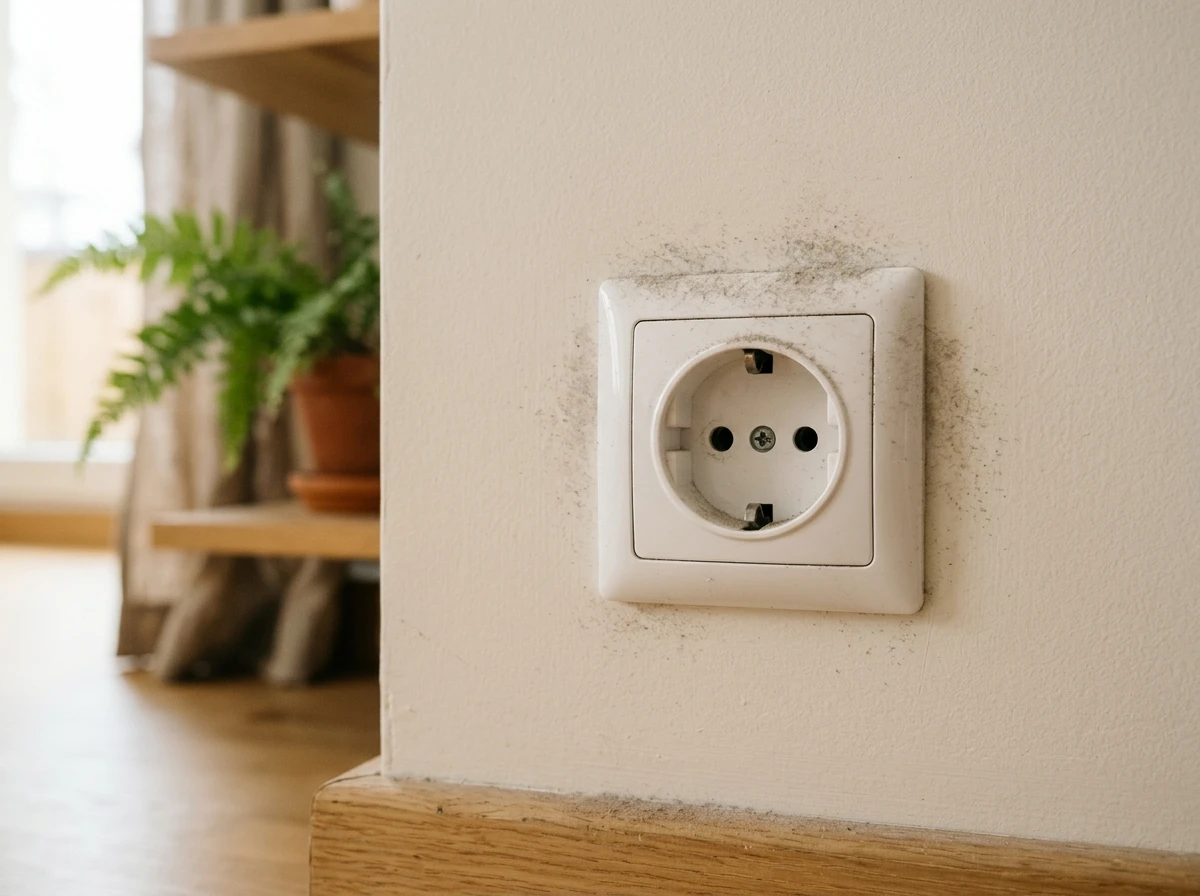
Did you notice an unexpected dark stain around the outlet on your wall? While wall darkening often raises questions, quickly identifying the causes helps you find a safe solution and keep your home environment comfortable and protected at all times.
The dark tone around the edges of an outlet can point to two very different phenomena: harmless dust accumulation or electrical system overheating. Taking informed action helps you quickly determine whether simple cleaning will suffice or if the system needs a qualified specialist's attention.
Static electricity and air circulation, or dust accumulation
The most common and completely harmless cause of dark shadows is the accumulation of microscopic dust particles on the wall. When household appliances and chargers operate, a weak electrostatic field forms around the outlet, attracting particles naturally circulating in the room, such as textile dust, pet hair, and cooking vapors. Additionally, microcracks in the wall can create air movement caused by temperature differences, carrying dust directly to the edges of the outlet's plastic cover.
If it's dust accumulation, the dirt comes off easily when wiped with a dry or barely damp cloth, and the outlet body feels completely cool to the touch. In this case, good room ventilation and regular dust removal are sufficient. When cleaning, always remember not to spray cleaning products directly onto the outlet or insert objects into its openings.
Electrical system overload and loose connections
If the darkening is brownish or charred in tone and the plastic surface feels uneven, heat damage is involved. A common cause of outlet overheating is using multiple high-power devices simultaneously in one circuit or electrical connections that have loosened over time. If contact between the power cord and outlet weakens, resistance forms, raising the temperature at the contact points and potentially melting the outlet body and damaging the wall covering.
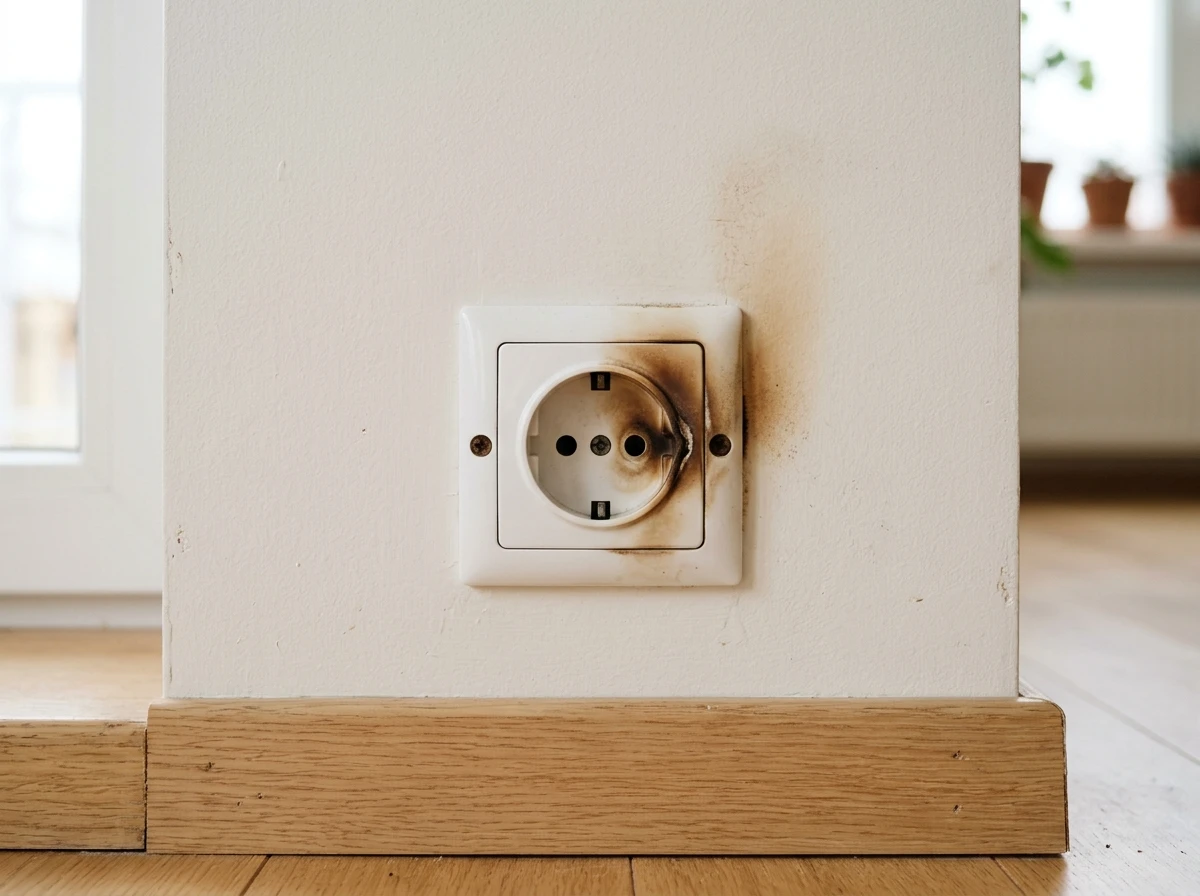
Act immediately if the outlet feels warm to the touch, emits a burnt plastic smell, sparks appear when connecting a device, or you hear a quiet crackling sound from the outlet. If these signs appear, immediately disconnect devices from the power grid and switch off the corresponding circuit breaker in the distribution panel. For more detailed instructions on assessing the condition of contacts and switches, you'll find guidance in our guide, how to check and maintain electrical outlets and switches safely.
Ensuring your home's electrical safety in the long term
According to the Rescue Board, in 2025 electricity was the most common cause of fires in residential buildings, resulting in 103 fires, which is why every color change on a wall deserves careful attention. In accordance with the guidelines of the Consumer Protection and Technical Supervision Authority, repairs and replacement of damaged, melted, or overheating outlets should be entrusted to a qualified electrician who performs the work safely and checks the entire circuit's reliability.
In addition to properly functioning wiring, a properly operating alarm system offers peace of mind in everyday life. A sensor placed in the correct location will alert you at the first signs of smoke. Be sure to review how proper smoke detector installation is carried out to ensure complete peace of mind for your family in every living space.
A technically inspected and well-maintained electrical system ensures safe daily living and steadily increases property value. If you plan to improve your living conditions or are looking for a new and modern home, explore Kinnisvara24's diverse sales and rental offerings and find a suitable place to live today.
Search
Keywords
Most read articles
- Price per Square Meter of Apartments in Tallinn in 2025

- Apartment Market in Early 2026: Prices Rising, Transaction Activity Remains Modest

- Apartment Market in Early 2026: Prices Rise, Transaction Activity Remains Modest
- Estonian Apartment Prices and Market Expectations in 2025
- Notary Fee and State Fee – Who Pays and How Much?