Building a Wardrobe: Stages of Work, Materials and Solutions
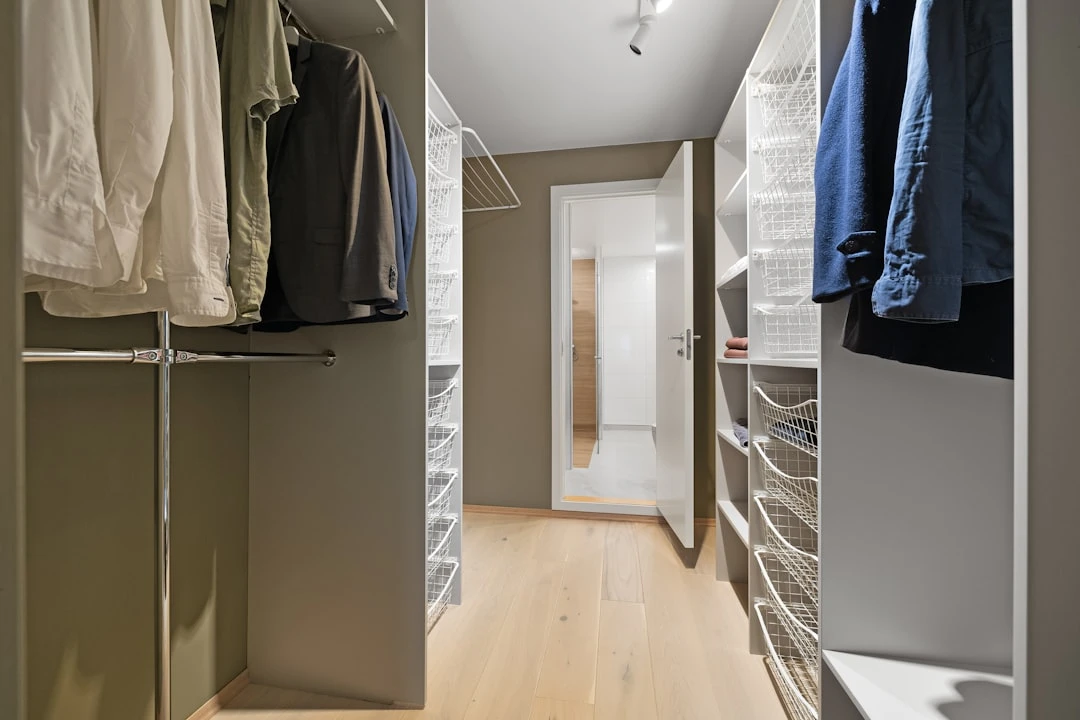
Have you ever stood in front of your wardrobe in the morning and felt that all these clothes deserve a better storage solution? A well-planned wardrobe not only keeps your clothes organized but also makes everyday life significantly easier. Let's take a closer look at how to build a wardrobe, what materials to use, and how much it might cost in 2025.
Why invest in a proper wardrobe?
A well-planned wardrobe offers multiple benefits:
Reduces clutter and saves space
Helps keep clothes in better condition
Makes getting dressed faster and more convenient
Increases home value
Research from new developments shows that quality wardrobe solutions can add value to a home in the range of 8,000–14,500 euros. Today's Estonian homes are increasingly designed with adequate wardrobe or dressing space, which is a clear change compared to apartments from 10-15 years ago, where bedroom space often allowed only for a bed.
Stages of wardrobe construction
1. Planning and needs assessment
Before building a wardrobe, it's important to think through carefully:
How much and what type of storage space do you need?
What are your dressing habits?
Do you have specific needs (shoes, handbags, jewelry)?
What is the room's size and shape?
When planning, account for hanging space for both short and long clothes, separate drawers for accessories, and storage options for seasonal clothes.
2. Measurement
Accurate measurements are the foundation of successful wardrobe construction:
Measure the room's length, width, and height
Mark the locations of windows, doors, and electrical outlets
Consider ceiling beams and other potential obstacles
Ideally, electrical connections should be installed when planning the wardrobe in strategic locations, which allows you to add lighting or other electrical solutions later.
3. Design and material selection
Here you can choose between different solutions:
Standard modular systems – a faster and more affordable solution
Custom order – tailored exactly to your space and needs
Material quality significantly affects the wardrobe's appearance and durability:
MDF – affordable, light, good finishing options
Particleboard – durable, various finishing options
Solid wood – natural, long-lasting, but more expensive
Glass – used in door details, gives a luxurious look
Metal – often used in details and sliding rails
In Estonia, birch plywood with oil-wax finish, oak veneer materials, or special HPL-coated veneer boards are often used in the manufacture of quality wardrobes, ensuring durability and an elegant appearance.
4. Work execution
Wardrobe construction usually takes place in the following stages:
Space preparation (removal of old furnishings, wall preparation)
Construction installation
Installation of shelves, hanging systems, and drawers
Adding doors and finishing details
Installation of lighting and additional equipment
Work can take from a few days to several weeks, depending on the complexity and scope of the wardrobe.
Main types and solutions for wardrobes
Wardrobe with sliding doors
Sliding doors are a practical solution, especially in smaller rooms where conventional hinged doors would take up too much space.
Advantages:
Saves space since doors don't open outward
Works well in small rooms or hallways
Can use mirror surface, which visually enlarges the space
Disadvantages:
Limited access to the entire contents at once
Can be more expensive than hinged solutions
Trends show that while sliding doors are still popular, hinged doors with handles are increasingly preferred in Estonia and have become one of the most popular choices in bedroom wardrobe solutions.
Built-in wardrobe
A built-in wardrobe means a wall-to-wall solution that uses the entire existing space.
Advantages:
Maximum space efficiency
Can be customized to suit the room's characteristics
Aesthetically clean appearance
Disadvantages:
Less flexible if you want to rearrange furniture in the future
Can be more expensive than separate modular solutions
Corner wardrobe
An ideal solution if you want to use a room's corner.
Advantages:
Uses otherwise difficult-to-use corner space
Allows creating larger storage space in a smaller area
Can combine different storage solutions
Disadvantages:
Corner details can be more expensive
Planning requires precision
Open wardrobe
A modern solution that doesn't require doors and emphasizes aesthetic appearance.
Advantages:
Good air circulation and overview of clothes
More affordable than closed systems
Quick access to all items
Disadvantages:
Dusts easily
Requires constant maintenance
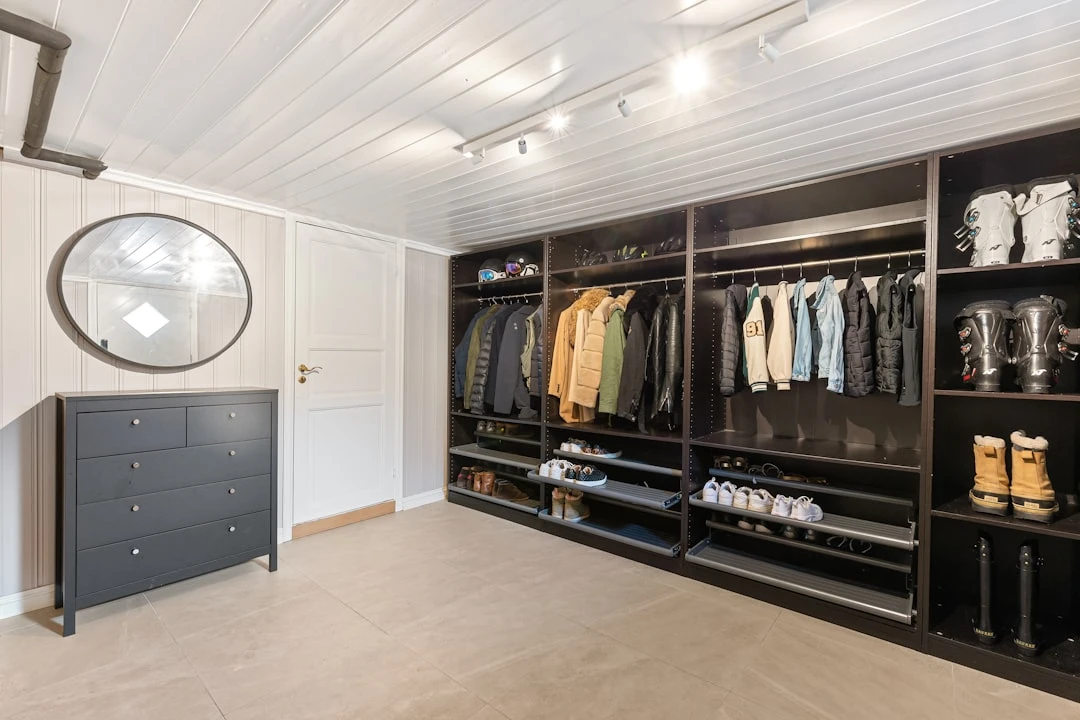
Walk-through wardrobe
A luxury solution that is the dream of large bedrooms.
Advantages:
Separate dressing room with privacy
Maximum storage capacity
Possibility to create a perfect organization system
Disadvantages:
Requires a separate room
More expensive solution
Price ranges and budget
Wardrobe solution prices depend on many factors: size, materials, finish, additional equipment, and whether you order full service or build it yourself. The following are estimated price ranges on the Estonian market for 2025 and beyond:
Standard modular solutions
IKEA-type solutions: 200-1,200 euros (depending on size and materials)
Mid-range brand solutions: 800-3,000 euros
Custom-order wardrobes
Average price tier: 3,000-8,000 euros
Premium solutions: 8,000-15,000 euros
Luxury complete solutions: 15,000-30,000 euros and upward
Customized built-in wardrobes
Full-room solutions: 5,000-20,000 euros
With high-quality materials and mechanisms: 20,000-40,000 euros
Luxury custom-made solutions: 40,000+ euros
Top-quality wardrobe solutions can reach prices of 20,000-200,000 euros, depending on size, materials, and special customization.
Additional materials and services
Installation service: typically 15-25% of the total product value, but not less than 200 euros
Special interior elements (lighting, jewelry storage, shoe systems): 300-1,500 euros
Quality sliding rails and closing mechanisms: 100-500 euros
DIY vs professional installation
Do it yourself (DIY)
Pros:
Significant financial savings (30-50% of the entire project cost)
Ability to build exactly according to your needs
Performing work according to your schedule
Cons:
Requires skills, tools, and time
Finishing and quality issues may occur
No warranty and professional support
Suitable for you if:
You have previous furniture installation experience
Your solution is relatively simple (e.g., standard modules)
Time is not a limiting factor
If you plan to install it yourself, be sure to familiarize yourself with the laminate flooring installation guide and wall repair advice, as wardrobe installation may require both skills.
Professional service
Pros:
Higher quality and professional finish
Warranty on the work done
Faster execution
Expert advice already in the planning phase
Cons:
Significantly more expensive
You are dependent on the service provider's schedule
Communication problems may occur
Suitable for you if:
You want a quality solution with long-term warranties
Your wardrobe solution is more complex (e.g., custom solutions, niches)
You value your time and comfort
If you plan a larger-scale wardrobe renovation, it can also be useful to learn from old house renovation experience, especially if it's an older property.
How to find a reliable service provider?
To find a quality wardrobe solution:
Research the service provider's previous work and customer feedback
Request quotes from several providers
Make sure the materials and furniture used are quality (e.g., Häfele closing hinges and drawer rails are highly rated)
Check warranty conditions and after-sales service options
On the Kinnisvara24 portal, you can find various real estate offers where you can get inspiration for well-planned wardrobe solutions. If you're looking for a new home, it's also worth checking apartment sales offers or rental apartments, which often already have well-thought-out wardrobe solutions.
Lighting and organization
A well-planned wardrobe also needs a good lighting solution. Properly placed lights make finding clothes easier and create a pleasant atmosphere. LED strips under shelves, spotlights, and even small pendant lights are popular choices.
When planning your wardrobe solution, it's important to also consider ideas for improving home comfort, which help create a functional and aesthetically pleasing environment. In your wardrobe, you could also apply feng shui principles, which help energy flow better and create a harmonious environment.
Space-saving solutions
If you live in a smaller home, you can also consider combined solutions. For example, a pull-out sofa bed saves space and allows you to use existing space efficiently. Similarly, you can think about small kitchen solutions, from which you can draw inspiration for compact wardrobe planning.
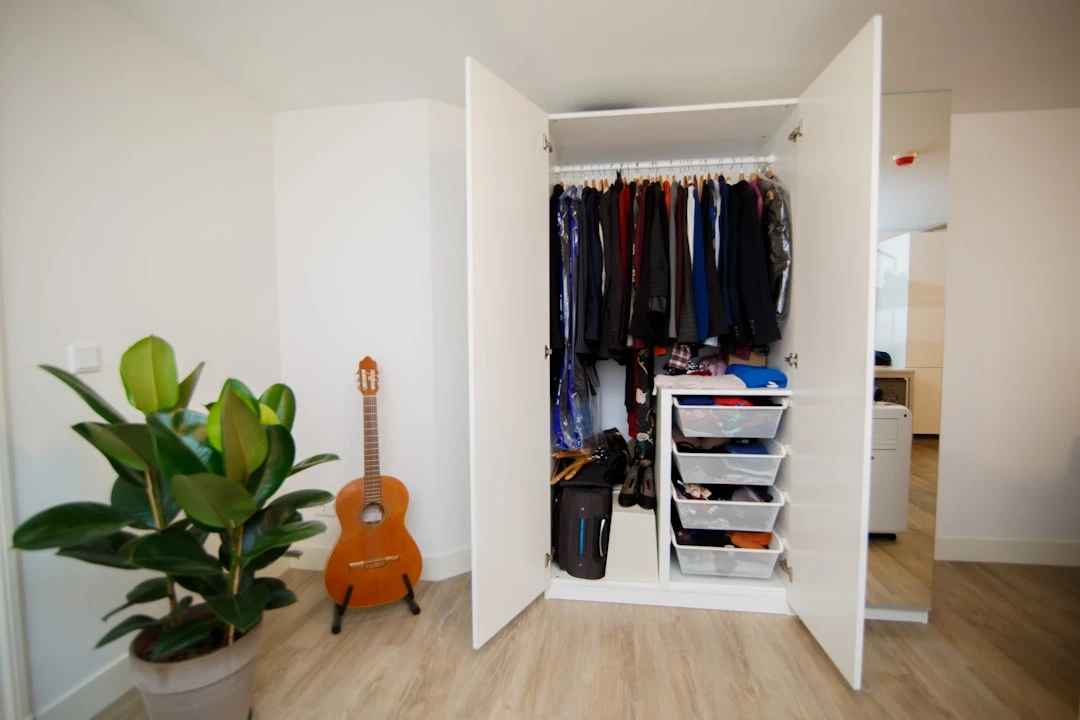
For a smaller apartment or small balcony, you need to be especially creative so that the wardrobe design is both functional and aesthetically pleasing. Often, the solution lies in multifunctional furniture pieces that serve multiple purposes.
Summary
Building a wardrobe is an investment that adds both functionality and value to your home. Depending on your needs, budget, and space, you can choose from different solutions – sliding door wardrobes, built-in wardrobes, corner solutions, or even a walk-through wardrobe.
Quality materials and skilled execution ensure that your wardrobe remains beautiful and functional for years to come. Whether you choose the DIY route or professional service, with good planning you can create a wardrobe solution that makes your everyday life more convenient and organized.
We recommend consulting with several specialists, exploring new developments, which often already have well-thought-out wardrobe solutions, and thinking through your long-term needs. A well-designed wardrobe is not just a place to store clothes, but an important part of your home's overall functionality and well-being.
Search
Keywords
Most read articles
- Price per Square Meter of Apartments in Tallinn in 2025

- Apartment Market in Early 2026: Prices Rising, Transaction Activity Remains Modest

- Apartment Market in Early 2026: Prices Rise, Transaction Activity Remains Modest
- Estonian Apartment Prices and Market Expectations in 2025
- Notary Fee and State Fee – Who Pays and How Much?